Home › Cities › Washington, DC
Where the Nation's Capital Meets Autonomous Intelligence: PinkyBot.io's Washington, DC Command Center
Washington, DC isn't just a city of monuments and marble—it's a city of relentless work, 24/7 demands, and systems that never truly sleep. From federal agencies to local service businesses competing for visibility across 136 neighborhoods, DC professionals understand something fundamental: the work doesn't stop when you do. PinkyBot.io brings that same tireless autonomy to every business operating within the District, turning the endless cycle of client acquisition, content creation, research, and operations into a fully autonomous digital workforce that runs around the clock. While your competitors are sleeping, your 14 AI bots are working. While they're struggling to scale local SEO across neighborhoods, your CityForge engine has already generated premium, unique city pages across the entire DC metro. This is what it means to build a business that actually runs itself.
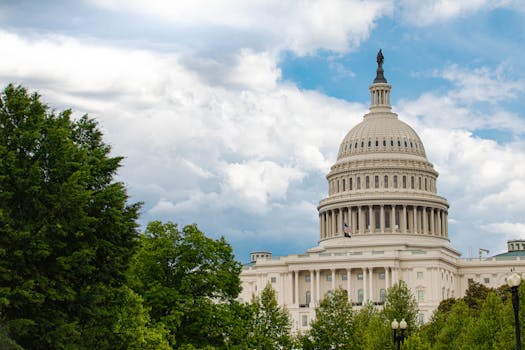
The Federal City's Transformation Challenge: Why Autonomous AI Matters in Washington
Washington, DC faces a unique economic pressure point in 2026. Federal workforce reductions are forecasted to eliminate 40,000 government-related jobs over the coming years, draining $1 billion in city revenues and forcing a hard pivot toward private-sector growth. The city's "Grow DC" agenda aggressively targets technology, sports, entertainment, and tourism businesses with tax incentives and streamlined regulations. This is an inflection point—the moment when DC businesses must evolve from a government-dependent economy to a competitive marketplace where visibility, speed, and constant optimization matter more than ever.
PinkyBot.io arrives at exactly this moment. Service businesses—HVAC contractors servicing the city's 90,000+ housing units, plumbers handling the Smithsonian's aging infrastructure, dentists competing across wards, real estate agents managing Georgetown's luxury market—face unprecedented pressure to maintain leads while costs climb. Content marketing takes time. SEO takes months. Team scaling is expensive. Autonomous AI doesn't. Your bots start working the moment you sign up, executing research, generating assets, managing pipelines, and optimizing operations without fatigue, without error, and without the overhead of hiring.

Federal Contracting and Government Services
For contractors and service providers working with federal agencies across DC, the margin for error shrinks every quarter. Federal compliance, bid management, documentation, and project tracking demand precision at scale. PinkyBot's BusinessBot manages full CRM suites with client databases, deal pipelines, invoicing, email templates, and team coordination—critical for government work where documentation and communication trails determine wins and losses. TasksBot automates project delegation. CodeBot handles any custom integrations needed to interface with federal procurement systems. The platform's role-based access control and audit trails satisfy federal security requirements that would normally require expensive enterprise software.
The Eight-Ward Opportunity: Local SEO Across DC's Fragmented Neighborhoods
One of DC's most misunderstood characteristics is its fragmentation. The city doesn't function as a single market—it functions as 136 distinct neighborhoods spread across 8 wards, each with different demographics, income levels, traffic patterns, and service needs. A plumber in Capitol Hill (Ward 6) competes in a completely different market than one in Ward 8's Anacostia. A dental practice in Georgetown (Ward 3) serves a different clientele than a clinic in Bloomingdale (Ward 5). Traditional SEO treats DC as one city. That's why traditional SEO fails.
CityForge, the killer feature in PinkyBot's Business tier, was built specifically for this problem. Select the neighborhoods and wards where you operate on an interactive map. CityForge's research engine pulls real local data—competitors, attractions, traffic patterns, major employers, landmarks, events, demographics—for each area. Then it generates premium, unique city pages optimized for local search, each reading as if written by a local expert, not spun from templates. In 48 hours, one user generated 167 city pages across 131 cities with over 300,000 words of unique content for under $30 in API costs. That same output from a traditional agency runs $50,000 to $100,000.
For DC service businesses, CityForge means you can own local search across every neighborhood where you operate—Capitol Hill, Georgetown, Shaw, U Street, Dupont Circle, Logan Circle, Adams Morgan, Ward 7, Ward 8—without hiring a content team or waiting months for results.

Georgetown: The Luxury Market Edge
Georgetown represents DC's highest-value local market—historic waterfront neighborhoods with luxury homes, high-net-worth residents, and intense competition for professional services. Real estate agents, contractors, and premium service providers in Georgetown need to dominate local search. CityForge generates Georgetown-specific pages featuring local attractions (C&O Canal, cobblestone streets, retail corridors), competitor analysis, neighborhood demographics, and strategic CTAs positioned to capture high-intent local searches. The same applies to Dupont Circle, Logan Circle, and the Capitol Hill corridor—each generates its own research-backed, premium city page.
Emerging Wards: The Volume Play
Wards 5, 7, and 8 represent emerging neighborhoods—Bloomingdale, Ivy City, Anacostia, and surrounding areas with lower median home values, rising development, and underserved service markets. Volume-based service businesses (HVAC, plumbing, electrical) often win these neighborhoods through sheer visibility and response speed. CityForge enables you to generate premium local pages across these wards quickly, claiming search real estate before competitors catch on.
14 Bots, One Autonomous Workforce: How PinkyBot Runs Your DC Business
PinkyBot's core strength is its diversity. Rather than one general-purpose AI bot, you get 14 specialized bots, each owning a specific function and executing autonomously every 15 minutes on the platform's heartbeat cycle.
TasksBot manages your project pipeline, prioritizing work, delegating tasks to other bots, and tracking completion. CodeBot writes, debugs, and deploys custom code without human intervention—critical for service businesses integrating with custom booking systems, payment processors, or dispatch software. DocsBot generates technical documentation, SOPs, and client guides automatically. ResearchBot conducts competitive analysis and market research using live web data, feeding insights into your strategy without requiring manual research hours.
SocialBot drafts, schedules, and publishes content across Instagram, Facebook, LinkedIn, TikTok, and other platforms—keeping your DC service business visible without daily manual posting. BusinessBot runs a full CRM suite with client management, contact tracking, deal pipelines, invoicing with PDF generation, email templates, and team coordination. SecurityBot continuously audits your systems for vulnerabilities, monitoring API endpoints and authentication events—critical for businesses handling client data.
The remaining eight bots—KnowledgeBot, ScheduleBot, AnalyticsBot, ClipperBot, StreamBot, CryptoBot, FileSystemBot, and ClipperBot—handle knowledge management, scheduling, analytics dashboards, AI video clipping, live stream management, cryptocurrency tracking, and file organization. Every bot operates within governed security rules and defaults to data isolation. Every 15 minutes, they wake up, check the task queue, execute the highest-priority work, verify results, commit changes, and go back to sleep.
The Heartbeat: Autonomous Execution Every 15 Minutes
Most AI platforms promise autonomy. PinkyBot delivers it. Every 15 minutes, a cron job triggers execution across all bots. This isn't a one-time task or a manual batch—it's continuous, autonomous work that runs 24/7/365. Failed tasks escalate after two attempts rather than brute-force retrying. A functional scanner continuously audits your dashboard for broken buttons, missing data, and stale cache. The system manages its own concurrency, preventing resource conflicts and keeping git history clean.
For DC service businesses, this means your lead pipeline never stops feeding. Your social media keeps posting. Your CRM stays organized. Your competitors' phone rings during business hours. Yours rings around the clock.
PinkyBot Pricing: Scaled for DC Businesses of Every Size
PinkyBot's six pricing tiers are designed to fit DC businesses at every growth stage, from solo operators testing autonomy to enterprise teams running mission-critical operations.
Free ($0/month): Three core bots (TasksBot, CodeBot, DocsBot), 5 API calls per day, 5 documents, 100MB storage. Perfect for testing the platform and understanding what autonomous AI can do.
Starter ($49/month): Six bots including ResearchBot, SocialBot, and KnowledgeBot. 25 API calls daily, 50 documents, 1GB storage, 4-hour heartbeat cycle. Ideal for solo service providers and small teams just starting automation.
Pro ($149/month): Full 14-bot roster, 100 API calls per day, unlimited documents, 10GB storage, bring-your-own-key support for 21 AI providers, 1-hour heartbeat cycle, 3 team seats. The power-user tier for serious automation.
Business ($349/month): Everything in Pro, plus CityForge local SEO engine, AI Clipper across 20+ platforms, 500 API calls per day, 50GB storage, 15-minute heartbeat cycle, and 7 team seats. For DC service businesses serious about dominating local search and scaling content.
Self-Hosted ($599/year): PinkyBot on your own infrastructure. Unlimited bots, storage, API calls, team seats, complete data sovereignty. You bring your own API keys and manage the server.
Managed ($899/month): Dedicated server with 1TB storage, white-glove setup, and full maintenance. PinkyBot provisions and manages the VPS so you focus on business, not infrastructure.
Every paid tier includes bring-your-own-key support for 21 AI providers—Anthropic, OpenAI, Google Gemini, Groq, Perplexity, Mistral, Cohere, and more. Alternatively, purchase PinkyBot tokens and pay per operation with zero markup complexity.
Ready to automate your DC service business? Book a demo and see the 14 bots in action. Watch TasksBot delegate work. Watch SocialBot schedule posts across platforms. Watch CityForge generate your first city pages. The bots don't sleep. Neither should your business.
Security Built Into The Foundation, Not Bolted On
PinkyBot's security architecture was designed with one principle: default deny. Every API route is blocked unless explicitly whitelisted. User A cannot see User B's data. A self-hosted administrator cannot access the platform administrator's workspace. Authentication uses JWT with role-based access control across four tiers—platform admin, workspace admin, regular user, public.
Pre-commit security hooks validate every code change before production. JavaScript syntax is checked. Critical files are protected from unauthorized modification. File deletions are blocked. Commits that fall behind master are rejected. A security audit runs after every build. Critical findings block deployment.
API keys and credentials are encrypted at rest. The platform supports bring-your-own-key integration with 21+ AI providers. Users who prefer not managing their own keys purchase PinkyBot tokens—deducted per operation with full transparency and no hidden costs.
For DC businesses handling client data, government contracts, or sensitive information, this security-first approach isn't a feature—it's a requirement.
Your DC Neighborhood Competition Map: Who's Playing, Who's Winning
Washington, DC's competitive landscape for custom services spans fabrication, design-build remodeling, software development, and specialized trades. The strongest competitors operate at the top of the value spectrum—Blue Edge dominates branded environments and custom fabrication for events and retail. Anthony Wilder Design/Build commands the premium home renovation market with 30+ years of industry recognition. BOWA wins through exceptional client experience and 80% repeat business. EastBanc Technologies dominates enterprise software and federal contracting.
What all these competitors share: they operate through traditional channels—direct sales, reputation, agency relationships, referrals. They generate leads through standard methods. They scale through hiring and traditional marketing. PinkyBot inverts this model. You automate the work that drives leads. You scale without hiring. You compete through speed and visibility rather than pedigree.
In a city where Georgetown luxury contractors charge premium rates and federal contractors win through compliance expertise, PinkyBot levels the field for service businesses competing for visibility. Generate local SEO content in 48 hours instead of six months. Manage your CRM, social media, and project pipeline without a team. Stay visible 24/7 while competitors work 9-to-5.

The National Mall, Smithsonians, and Beyond: What Drives Tourism Traffic to DC
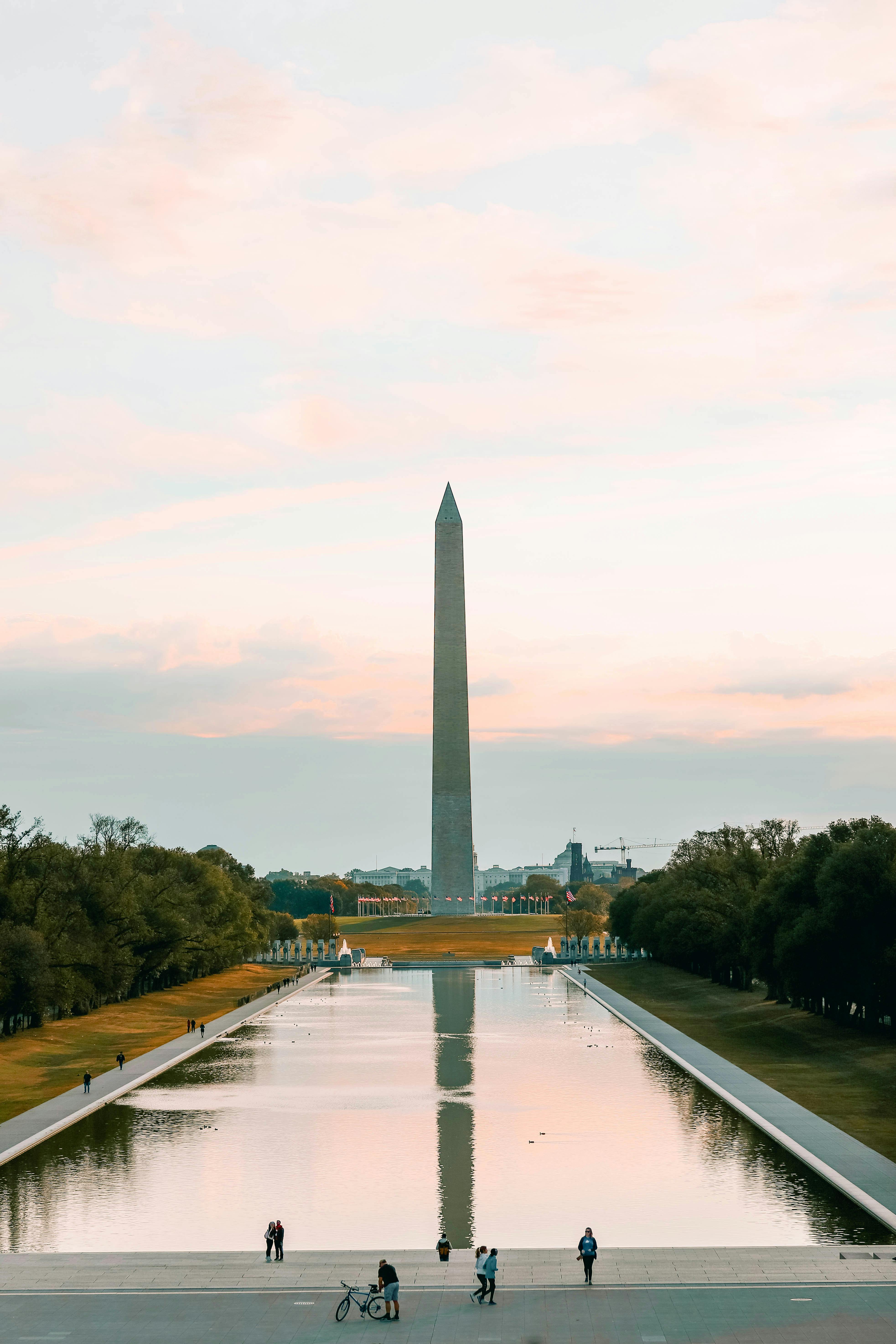
Washington, DC attracted millions of visitors in 2025, and 2026 promises even higher volume. The National Mall—stretching nearly two miles from the Capitol to the Lincoln Memorial—remains the city's gravitational center, lined with 65+ monuments and free Smithsonian museums. The National Museum of Natural History draws families and school groups. The Air and Space Museum remains the most visited museum in America. The National Gallery of Art showcases 141,000 works spanning medieval to modern.
Georgetown's cobblestone streets and waterfront draw shopping and dining crowds. The Tidal Basin's cherry blossoms (peak March-April) create seasonal tourism spikes. The National Cherry Blossom Festival (March 20 – April 12, 2026) adds new cherry trees and events. The city's 250th anniversary celebrations throughout 2026 drive unprecedented visitor numbers.
For service businesses, this traffic creates volume. Hotels need maintenance. Restaurants need plumbing, HVAC, electrical work. Tourism venues need security and IT support. Federal agencies hosting visitor centers need facilities management. Your CityForge pages capture search traffic from this tourism ecosystem.
The Waterfront Revolution: Where Entertainment Meets Autonomous Content
Washington, DC's **Wharf** has transformed the Southwest Waterfront into a pedestrian-friendly entertainment district with multiple performance venues, restaurants, rooftop bars, and piers. The Anthem (2,500–6,000 capacity) hosts national touring acts. Union Stage books intimate indie shows. Pearl Street Warehouse features roots music and salsa nights. Cantina Bambina and 12 Stories offer post-show rooftop spots with river views.
U Street/Shaw remains the city's punk and indie rock epicenter. The 9:30 Club (1,200 capacity) has hosted Nirvana, The Killers, and decades of underground acts. DC9 books indie and DJ nights. Dacha beer garden provides community gathering space. This neighborhood pulses with live music, creative energy, and exactly the kind of independent business—clubs, bars, vintage shops, tattoo parlors—that struggle with digital visibility.
H Street NE (the Atlas District) has revitalized into a mixed-use entertainment corridor with bars, pop-up galleries, international cuisines, and the Atlas Performing Arts Center. The annual H Street Festival draws thousands. The newly extended DC Streetcar connects the neighborhood to downtown. Rock & Roll Hotel and H Street Country Club anchor the nightlife scene.
14th Street NW focuses on indie and alternative music, with the Black Cat (~700 capacity, two stages, vegan cafe) hosting everything from Afro-beat to experimental indie.
For hospitality, entertainment, and venue businesses in these neighborhoods, visibility drives revenue directly. A wedding venue needs to rank for "wedding venues in Georgetown." A bar needs to appear for "live music near U Street." An event space needs local search visibility. CityForge generates neighborhood-specific pages optimized for these exact searches.

Stop fighting to be seen in the Wharf, Shaw, U Street, H Street, and 14th Street scenes. Contact the PinkyBot team to learn how hospitality and entertainment businesses in DC neighborhoods dominate local search. Your competitors are still updating their Facebook pages. You'll be generating premium local content automatically every 48 hours.
From Capitol Hill to Anacostia: Local Search Opportunities Across All Eight Wards
Washington's eight wards each represent distinct economic and demographic realities. Ward 1 (Northwest DC) encompasses Dupont Circle, Logan Circle, and Adams Morgan—high-income, young professional neighborhoods with strong service demand. Ward 2 includes downtown and the Smithsonian corridor. Ward 3 contains Georgetown, Cleveland Park, and Woodley Park—the city's most expensive residential areas.
Ward 4 (North Central DC) includes neighborhoods like Columbia Heights with mixed-income demographics and rising development. Ward 5 covers Northeast DC including Brookland, Bloomingdale, and Ivy City—emerging neighborhoods with lower property values and high contractor demand. Ward 6 (Capitol Hill, NoMa) has the highest population (99,652) and intense competition for professional services. Ward 7 (Anacostia and East DC) and Ward 8 (Southeast DC) represent the city's lowest-income areas with the highest service demand but lowest competitive visibility.
Traditional SEO treats all wards equally. PinkyBot allows you to target neighborhoods strategically. Maybe you generate premium city pages for Ward 6 and 3 (high-income, high-competition). Maybe you focus on Wards 5, 7, and 8 where volume-based contractors win through sheer visibility and response speed. Or maybe you go comprehensive and cover all eight wards in 48 hours with CityForge. The choice is yours. The execution is automatic.
Real Federal Contracting Complexity Simplified by Autonomous Systems
Federal contracting drives millions in annual spending across DC's service economy. Contractors maintaining Smithsonian facilities. Security firms protecting federal buildings. IT firms managing agency infrastructure. The complexity is immense—compliance requirements, procurement rules, documentation standards, team coordination across multiple federal clients.
PinkyBot's Business tier was built with this complexity in mind. BusinessBot manages full CRM suites with federal-compliant audit trails. TasksBot automates project delegation across teams. CodeBot handles custom integrations with federal systems. Role-based access control satisfies security requirements. Bring-your-own-key support lets you integrate with existing agency systems. Pre-commit security hooks ensure every change meets compliance standards.
For federal contractors, this means spending less time on administration and more time on delivery. Lead pipelines managed automatically. Client communication tracked. Invoices generated and tracked. Team coordination transparent. Compliance documented.

Federal contractors: See PinkyBot's Business tier pricing and discover how autonomous CRM and project management simplify federal complexity.
The Technology Ecosystem: Investment, Innovation, and Market Opportunity
Washington, DC's technology ecosystem is accelerating. The DC Technology Ecosystem Fund committed $2.4 million to startup acceleration. The Qualified High Technology Companies tax incentive allocated $2.2 million for qualifying tech firms. The DC Venture Capital Program leveraged $52 million for early-stage investments. Amazon's HQ2 in nearby Arlington onboarded 8,000 of 25,000 committed jobs, creating supporting business ecosystems.
This is the inflection point. Federal jobs are declining. Tech jobs are rising. Service businesses need to compete not just on local markets but on speed, visibility, and efficiency. A HVAC contractor in 2016 could win on reputation alone. A HVAC contractor in 2026 wins on visibility across neighborhood searches, social media presence, and mobile responsiveness. PinkyBot automates all three.
Frequently Asked Questions
How does CityForge generate 167 unique city pages without templating or content spinning?
CityForge uses Perplexity Sonar Pro to conduct real local research for each selected city—pulling data on competitors, attractions, traffic patterns, employers, landmarks, and events. The research engine stores unique local data for each city. Then the content engine generates custom pages with unique opening paragraphs, local details, semantic HTML structure, meta tags, JSON-LD schema, and strategically placed CTAs. Every page is written as if a local expert created it, because the content engine writes to the specific local data pulled for that city. No two pages start with the same opening. No content is spun from templates. The platform generated 167 premium pages across 131 cities in 48 hours for under $30 in API costs—proof that scale doesn't require templating.
Can PinkyBot's Business tier actually manage federal contracting complexity and compliance requirements?
Yes. The Business tier includes BusinessBot with full CRM functionality—client databases, contacts, deal pipelines, invoicing with PDF generation, email templates, team coordination, and role-based access control. Pre-commit security hooks validate every change. Default-deny authentication ensures federal compliance standards. User-scope firewall defaults to blocking all routes except whitelisted data access. API keys and credentials encrypt at rest. The platform supports bring-your-own-key integration with 21+ AI providers, allowing secure integration with existing federal systems. Audit trails satisfy documentation requirements. For federal contractors, this replaces expensive enterprise CRM suites while adding autonomous project automation.
What makes PinkyBot's 14 specialized bots different from a single general-purpose AI chatbot?
General-purpose AI chatbots answer questions. They don't execute real work. PinkyBot's 14 specialized bots each own a specific business domain and execute real tasks autonomously. CodeBot writes and deploys code. SocialBot schedules posts across Instagram, Facebook, LinkedIn, TikTok, and other platforms. ResearchBot conducts competitive analysis using live web data. BusinessBot runs full CRM operations. TasksBot manages project pipelines and delegates work. SecurityBot audits systems for vulnerabilities. Every 15 minutes, these bots wake up on the platform's heartbeat cycle, check the task queue, execute the highest-priority work, verify results, commit changes, and go back to sleep. That's why service businesses see real output—lead pipelines fed, content published, research conducted, systems audited—without human intervention.
How does local SEO work across Washington, DC's eight wards and 136 neighborhoods?
Traditional SEO treats DC as one market. PinkyBot treats it as 136 distinct neighborhoods. CityForge researches local data for each ward and neighborhood you select—demographics, competitors, attractions, employers, landmarks, events, traffic patterns. Then it generates premium, unique city pages optimized for local search in each area. A plumber in Capitol Hill (Ward 6) ranks for "emergency plumber Capitol Hill." A contractor in Anacostia (Ward 8) ranks for "home renovation Anacostia." Georgetown businesses rank for "Georgetown services" with pages featuring local attractions (C&O Canal, cobblestone streets, luxury homes). Each page reads as if written by a local expert because it's researched and written to local data. Ward 6 has 99,652 residents and intense competition. Ward 8 has lower population but underserved service markets. CityForge lets you target strategically—high-competition wards, high-volume wards, or comprehensive coverage across all eight.
Is PinkyBot's default-deny security model sufficient for federal contracting work?
PinkyBot's security architecture defaults to blocking every API route unless explicitly whitelisted. User A cannot see User B's data. A self-hosted administrator cannot access the platform administrator's workspace. Authentication uses JWT with role-based access control across four tiers. Pre-commit security hooks validate every code change before production. Critical security findings block deployment. API keys and credentials encrypt at rest. For federal contractors, this approach—security as a structural foundation rather than bolted-on compliance—satisfies agency requirements while avoiding the cost of dedicated enterprise systems. The BusinessBot CRM generates audit trails. The platform tracks all changes. Team permissions are granular. This satisfies federal documentation and compliance standards.
What happens if a bot fails or produces incorrect work?
PinkyBot's system is built to handle failure gracefully. When a bot attempts a task and fails, the system retries once. If the second attempt also fails, the system stops and escalates to a human rather than brute-force retrying indefinitely. A functional scanner continuously audits the dashboard for broken buttons, missing data, uncaught errors, and stale cache references. Failed tasks are logged. A file-based concurrency lock ensures only one AI process runs at a time, preventing resource conflicts and ensuring clean git history. For critical tasks (like code deployment or payment processing), quality gates verify results before commit. This means you get autonomous execution with safety rails—bots work 24/7 without human babysitting, but failures are caught and escalated rather than creating cascading problems.
How much does it cost to generate 167 city pages with CityForge, and how does that compare to hiring an SEO agency?
PinkyBot's proof of concept generated 167 premium city pages across 131 cities with over 300,000 words of unique content for under $30 in API costs. That same output from a traditional SEO agency runs $50,000 to $100,000 (often higher). The Business tier costs $349/month. Generate 167 pages once—you've paid for the tier for a month and created six months' worth of content. Generate 10 more campaigns (1,670+ total pages)—you've spent $3,490 while an agency would charge $500,000 to $1,000,000. The math is stark. For DC service businesses competing across multiple neighborhoods, CityForge makes local SEO at scale financially viable rather than a luxury only large corporations can afford.
Ready to Automate Your DC Service Business?
Washington, DC is transforming. Federal jobs are declining. Tech jobs are rising. Competition for service visibility is intensifying. The businesses winning in 2026 aren't the ones working harder—they're the ones whose systems never sleep.
PinkyBot isn't another AI chatbot that answers questions. It's 14 specialized bots executing real work on a 15-minute heartbeat cycle, 24/7/365. It's CityForge generating premium local SEO content across neighborhoods in 48 hours. It's BusinessBot managing federal contracting complexity. It's SocialBot keeping your brand visible while you sleep.
Start your free PinkyBot account and explore the platform with three core bots—TasksBot, CodeBot, and DocsBot. Run five API calls per day. See what autonomous AI actually does.
Or jump straight to the Business tier with CityForge for local SEO domination. Select your neighborhoods on the interactive map. Let the research engine pull real local data. Watch CityForge generate your first city pages. Claim search real estate before competitors catch on.
The capital city deserves a capital-grade autonomous platform. PinkyBot is live. The bots are working. Your DC business deserves to work while you sleep.
Nearby service markets: Arlington County | Alexandria | Bethesda | Rockville | Falls Church
---